Review of Spencer
By: Jenna Sparks

I hate biopics. Rarely have I ever encountered a film genre that disappoints me more than movies inspired by real people or true events. Granted, there have been a few that have felt rewarding to watch and not at all like entire lies gift wrapped as Oscar-bait. Additionally, there are times when it's easy to understand the changes made because real life is hardly always mimicable in an entertaining manner for film. But then there are films that come across as outright offensive for their creative freedom (Being the Ricardos, for one).
But there's something about the Royal Family that never ceases to garner attention and curiosity from audiences. Netflix's The Crown has, after all, won how many awards? Politics and feelings about the royals aside, there's so much mystery and intrigue surrounding the monarchy that we can't help but raise a brow.
I was eight years old when Diana, Princess of Wales died. For me, already a kid with a Disney complex, she was a real-life modern princess. I knew nothing about her personal life, the scandals or even the true horror of her death. I just remember being on an escalator in a department store with my mom and hearing the news across all the display televisions. We were shocked and I was heartbroken. This enigmatic, fascinating princess was gone.
Naturally, the older I got, it was impossible not to learn more and more about her life as a Royal and everything that surrounded and ruled her life. There are only a handful of times Diana's life has been featured as a subject of film or television and most recently, she was portrayed on The Crown by actor Emma Corrin. From a personal perspective, I'm not above commentary about the Royal family, as they are, indeed, public figures, but when it comes to the media surrounding Diana, nothing felt short of exploitative. The attempts at posthumously developing stories around famous figures, again, leads to far too many creative freedoms that manipulate the truths in ways that are often tacky or shocking, especially with someone like Diana, whose private life was consistently brutalized across tabloids and rumors.
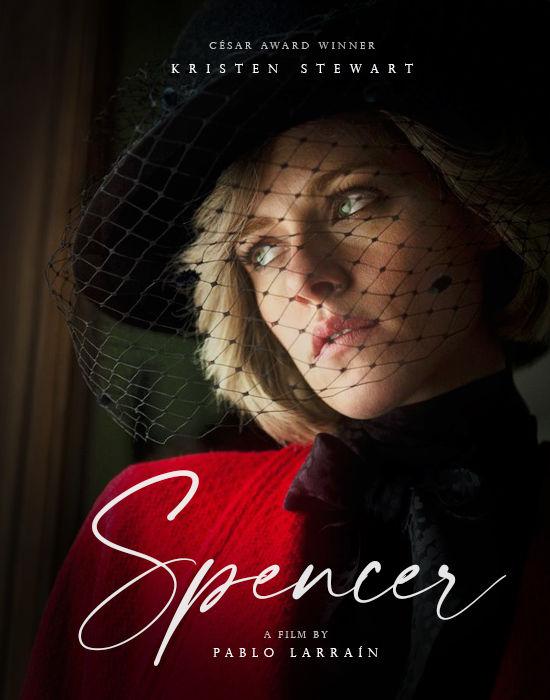
But enter Spencer, a film I watched for curiosity's sake. Starring Kristen Stewart, I was intrigued to see the actor's capabilities in this role, and let's be completely honest: the wardrobe.
Directed by Pablo Larrain (Jackie) and written by Steven Knight (Peaky Blinders), the film centers around several days during the holidays, speculatively the last holiday season before Diana and Charles separated in 1992. Over the course of these few days, Diana is faced with the reality of Charles' affair and relationship with Camilla Parker Bowles. When she discovers a mysterious book left behind for her to find about the life and death of Anne Boleyn, the second wife to King Henry VIII who had been notoriously chastised and annihilated in the public's eye before being charged for treason and ultimately beheaded, Diana can't help but see herself reflected in Anne Boleyn's memory. The pressures and paranoia of her time spent at the Queen's Sandringham Estate in Norfolk begin to wear her down; it seems that in her isolation in the house, there is no peace to be found. Everyone can hear everything, and all eyes are on her. What transpires is Diana's search for a breath of freedom with her children, away from the hushed tension at the estate, to live truly and freely and "have a bit of a fun."
The plot is, understandably, simple. When it comes to demystifying the truth, the film is adamant that it is a work of fiction, notably being referred to as, "a fable from a true story." While the film is intimate and delves into scenarios that are hardly easy to be screened for facts by the public, the film does take truths and characteristics known of Diana and spreads them across the screen in a way that, while it is exploitative and never shy to exhibit her personal history with bulimia, her insecurities, or her mental state as the focus of the story, never feels outright malicious toward Diana.
From the point of view of storytelling and filmmaking, there are astonishing scenes that are flooring. The internal struggle of Diana's mental health throughout the film is often dictated in a way that makes you feel as though you're a part of a retelling of Shirley Jackson's Haunting of Hill House, where Diana is Eleanor and we, the audience, are only suspect to what she is perceiving as reality or fiction. It's a winding road that is eclectically shot and beautifully arranged in a way that genuinely hurts your feelings to see. You want her to be okay, for her to escape her constraints and be happy; but we all know how the story ends.
As the film progresses and Diana's struggles with disordered eating and her mental state become more and more apparent, one can't help but feel a sense of watching something they're not supposed to be witnessing. We're close to this fictionalized, yet real character, this woman and her profound sadness and desire to have some semblance of a normal life, and it's easy to feel the same suffocation that is felt throughout the movie. It feels guilty.
The music, as well, lends to capturing the essence of this mental state. The first scene where we really get a clue about what's going on in Diana's head is the developmentnb of a musical piece by a live band that becomes erratic and incoherent. You can't help but be unnerved and disturbed; what's more, the silences spread across the duration of the film also aid in the tension of isolation and prying eyes and ears. There's always a stillness that reverberates and proves uneasy.
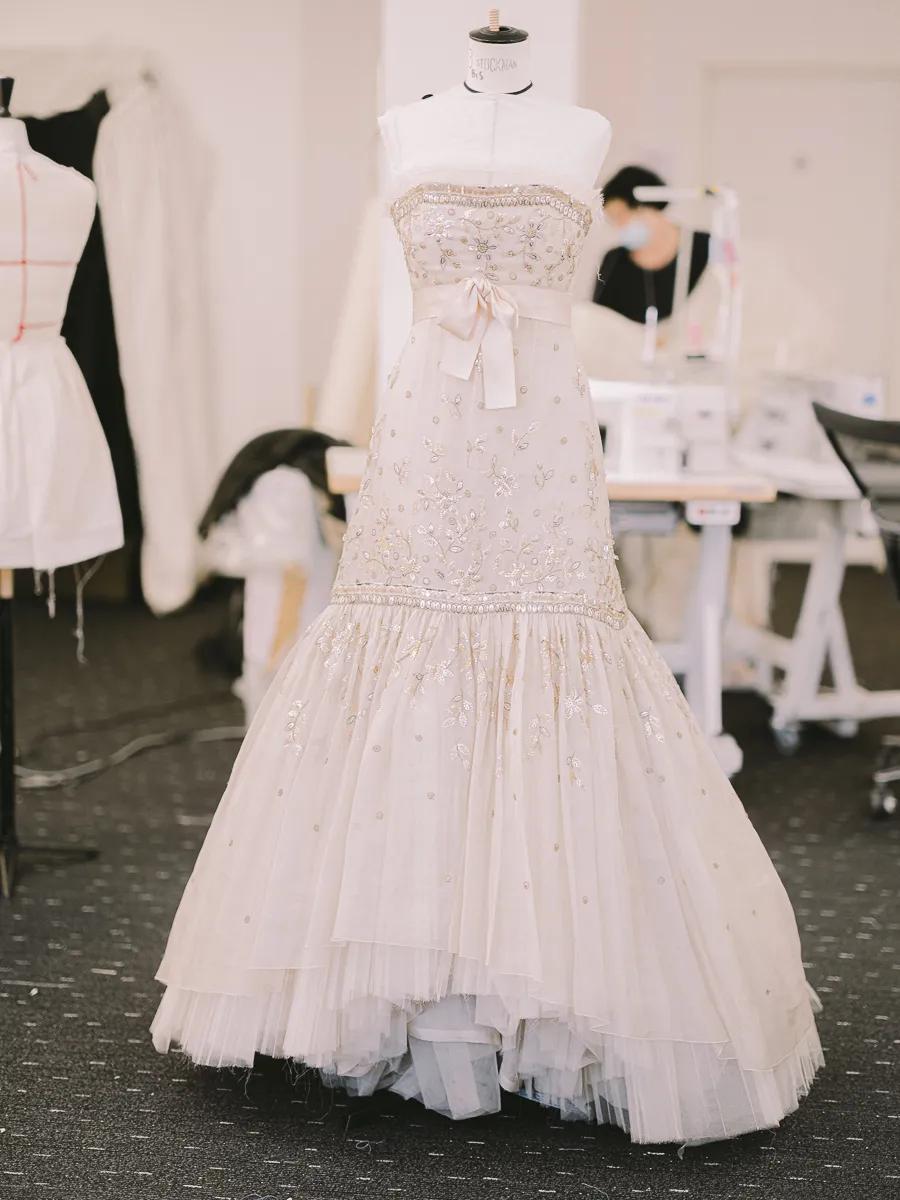
There are moments worth celebration, though. For one, the wardrobe. Diana had a hell of a fashion sense and pushed boundaries of what was to be expected. The film gives us glimpses of her Royal persona and the garments she's made to wear versus the comfort of a pair of jeans, a t-shirt, and an old hunting jacket. There is a wonderful nod to her feeling quite herself in her casual attire versus the plotted and planned ensembles she's meant to wear in the presence of the rest of the Royal Family. In these scenes, she's with her children, with the staff of the estate, or at times, completely stripped down and having a vulnerable conversation with beloved friend and dresser, Maggie (said to be based off a real person, albeit they remain anonymous). The clothes in this film tell the story in a way that's appreciative and delightful. Not to mention the thousands of hours that went into the creation of these garments. While Netflix's the Crown was able to get their hands on the original pattern for Diana's famous wedding gown, we see another recreation in Spencer and it's just as beautiful. A white Chanel gown from the Spring/Summer 1988 collection took well over one THOUSAND hours to make. According to an article by Vogue France, the embroidery on the gown itself took over seven-hundred hours!
So, let's talk about the elephant in the room. Kristen Stewart's performance. Stewart studied Diana's quirks for some time in preparation for the role, and it translates so well as to how we, the public, got to see Diana. That subtle downward chin tilt and looking up from under her brow, that mischievousness of her stare that could boldly tell anyone to go walk off cliff was perfected. Her dialect was beautiful, and it was easy to hear Diana's voice and tone, even in scenes that were unscripted and improvised. Stewart is believably Diana, between the wardrobe, the accent, the hair, and those intense stares. Multiple sources who had known Diana personally (and one who is featured in the film, chef Darren McGrady, played by Sean Harris) have been public about Stewart's ability to have completely captured Diana meticulously. Personally, I was a little wary of Kristen Stewart playing Diana, if only because we've never seen her in such a role. Then again, one role that completely turned me on to Stewart's acting chops was her role as Joan Jett in the Runaways (where she worked closely with Jett to get the essence of her character right). But for an American playing a British Royal, I was a ready to be a little cautious, but she did phenomenal, and honestly, I do hope she wins something out of it because she did a beautiful job.
The film ends on a joyous note and for that, I was thankful. The final scene felt like we were breathing for the first time throughout the film, and yes, I was a sappy cry-baby at this point. It was cheerful and you found the peace you'd been seeking for Diana. She got to have some fun, both with Maggie, and then her children, and I think it was a smart choice to go out on a note of joy rather than a reminder of further trauma and pain.
At the end of the day, the movie surprised me. I can see the heart that went into telling this story and the attempt of not posthumously exploiting a woman who was constantly questioned and challenged in her life. Unfortunately, how can any filmmaker not focus on the turmoil experienced when that was mostly what we, the public, ever saw of her? It's a fine line to walk and challenging to say the least. I personally feel conflicted after watching and enjoying it; I hate that I was entertained by this story about this very real person with very real struggles and very real pain. I respect the film for what it is and see the shining moments and the masterful storytelling and ability to portray someone in a way that, again, is admittedly a work of fiction based off truth. That kind of self-awareness in the biopic genre is commendable.
When I eliminate my personal opinions about biopics, I do have to be honest: I think the film is absolutely worthy of 5 out of 5 stars!